Machine Stable is an authorized distributor of the DEVELON brand under HD Hyundai.


Engineering Practice and Technical Considerations of Four Construction Methods for Rotary Drilling Rig Bored Piles
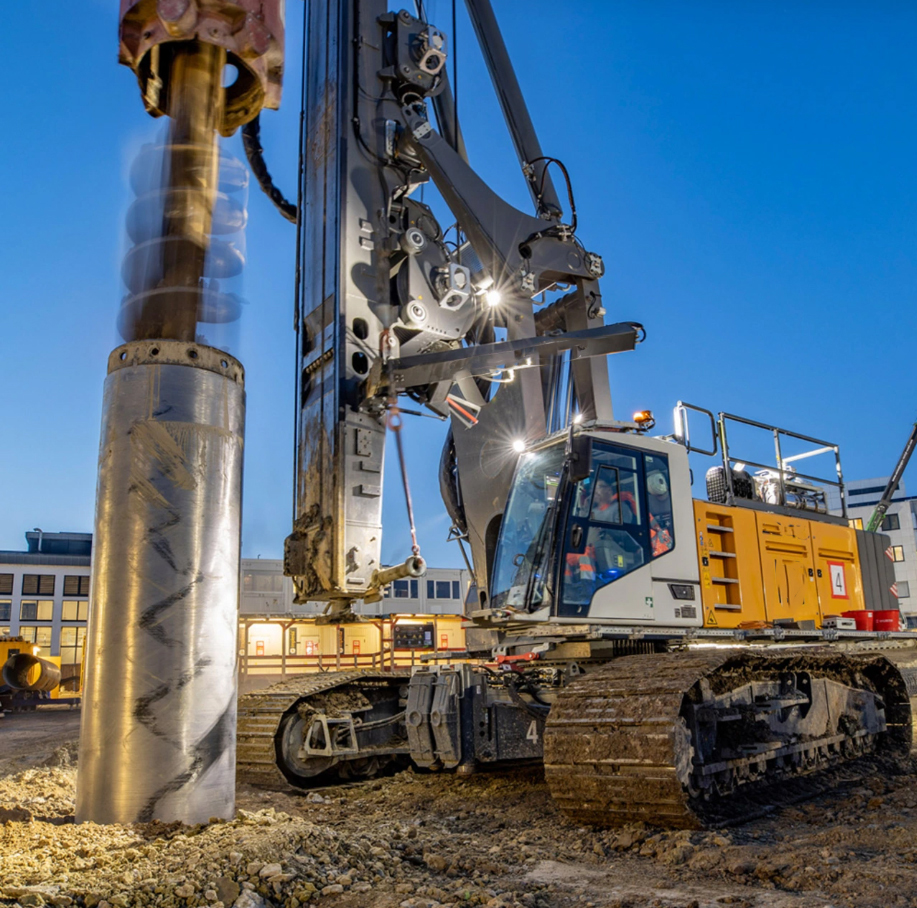
This article is not a machinery manual but a real construction summary based on my experience with rotary drilling rig pile foundations in multiple projects.
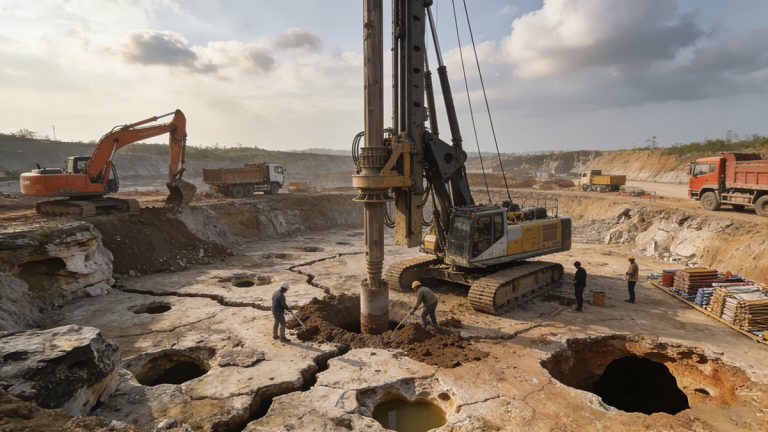
Over the past ten years, I have participated in foundation projects for municipal bridges, high-rise buildings, and rail transit. With the widespread adoption of rotary drilling rigs in China, rotary boring has become the mainstream method for bored piles. However, the success of a project is not determined solely by the equipment, but by whether the construction method matches the geological conditions.
Rotary boring does not have a universal solution. Only by making rational choices among dry boring, mud static pressure, casing, and concrete wall construction can safety, quality, and cost be balanced.
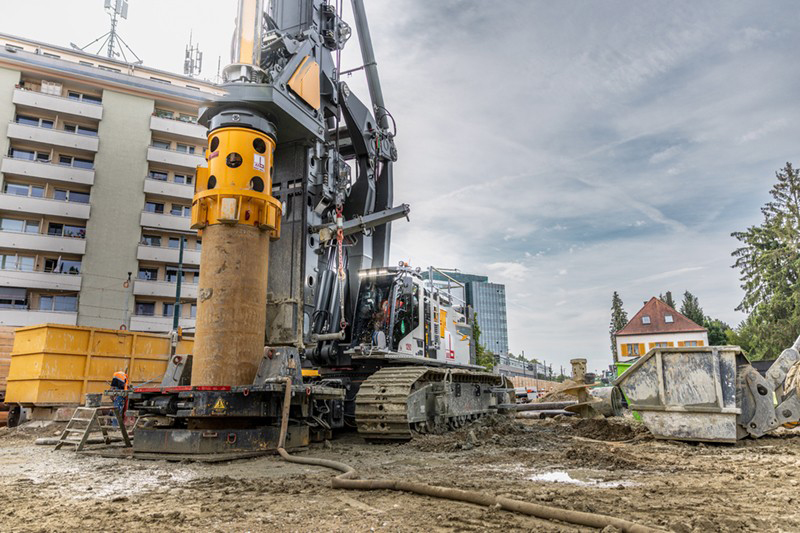
Understanding Rotary Boring from a Construction Perspective Rather than Equipment Specifications
In many tender documents or product promotions, a rotary drill rig is often described as “high torque and high efficiency” equipment. On site, I focus on three critical issues
- Can the borehole diameter and verticality be consistently controlled
- Does the system have redundancy to handle sudden geological changes
- In case of abnormalities, is there a reversible solution
From an engineering perspective, a rotary drilling rig is not just a machine but the execution terminal of an entire boring system.
Therefore, discussing rotary boring methods must start with geology, hydrogeology, and construction constraints.
Dry Boring Method: Simple but Not Necessarily Easy
In stiff clay and strongly weathered rock, I often evaluate dry boring first. This method is common in rotary foundation drill rig applications. The principle is to use the stability of the formation itself to replace external wall support.
Engineering Characteristics of Dry Boring
- No mud system required
- Short construction workflow
- Low cost per pile
However, the prerequisite is clear: the borehole must remain stable throughout the operation
Advantages and Limitations from an Engineering Perspective
Advantages
- Fewer steps and failure points
- No mud contamination or disposal issues
- Drilling parameters directly reflect formation changes
Limitations
- Difficult spoil removal in coarse sand or gravel layers
- Increased drill bit wear and significant vibration
- Once the hole collapses, recovery options are minimal
I once tried dry boring in a backfilled soil layer with gravel. At 18 meters depth, local borehole shrinkage occurred, forcing a method change and doubling the single pile construction time.
Mud Static Pressure Method: Mature but Easily Misused
In water-bearing sand layers and soft clay, mud wall support remains the mainstream method. Especially with a hydraulic rotary drilling rig, the mud system and rotary head output form a stable coordination.
Core Principle of Mud Static Pressure
Safety does not come simply from having mud but from real-time control of mud parameters.
Key control parameters include
- Mud density
- Viscosity
- Sand content
Common On-Site Control Tools
- Mud density meter
- Marsh funnel
- Sand content measuring cylinder
Suitable Mud Systems and Boundaries
| Type | Application | Risk |
|---|---|---|
| Bentonite mud | Conventional formations | Easy sedimentation, difficult hole cleaning |
| Polymer mud | Complex formations | High cost, sensitive mixture ratio |
In my experience, for urban projects, I prefer low-density polymer mud to reduce cleaning difficulty and environmental pressure.
Casing Method: High Cost but Irreplaceable in Critical Conditions
In interlocked piles, inclined piles, and highly disturbed formations, the rotary pile drilling rig with casing is almost the only reliable solution.
Engineering Value of Casing Method
- Physical support for borehole walls
- Forced guidance to control deviation
- Effective groundwater isolation
Core Components of Casing System
Casing is not an accessory but a complete system. Its design directly affects construction safety. This is why I focus on rotary drilling rig components during project review.
Key casing system components include
- Drive plate
- Connection plate
- Casing driver
- Casing body
- Shoe
Any mismatch among these parts can result in torque loss or jamming.
Structural and Operational Logic of Casing System
On site, I always require teams to verify the structure before lowering the casing, rather than adjusting during drilling. Understanding this is also crucial to grasping the working mechanism of a rotary drilling rig machine.
Comparison of Casing Installation Methods
| Method | Application | Features |
|---|---|---|
| Casing driver | Urban construction | High precision |
| Full rotation drilling rig | Complex formations | High capacity |
| Vibratory hammer | Temporary works | High efficiency but high disturbance |
Concrete Wall Construction Method: Emergency Rather than Standard
Strictly speaking, concrete wall construction does not belong to standard rotary boring methods. It is a passive safety backup.
Typical Application Scenarios
- Karst-prone formations
- Borehole deviation repair
- Local collapse sealing
Filling with concrete in these situations can create conditions for subsequent drilling. However, this affects drill bit wear and construction schedule, and must be evaluated in advance with consideration of rotary drilling rig parts.
Risk Warnings
Concrete wall protection has inherent delay. Misjudgment may easily cause drill jamming incidents.
Why Consistency Between Diagrams and Site Matters
During technical briefings, I always stress that engineers should not only read the plan but also understand the spatial relationships from the rotary drilling rig diagram, including
- Drill tool length
- Casing joint position
- Rotary head stroke
These directly affect borehole accuracy.
Returning to the Core Question
Many beginners ask, what is rotary drilling rig?
From my perspective, the more important question is
Under the current geology and construction constraints, which method ensures safe, controllable, and traceable boring?
The rig itself is just a tool. The real technical challenge lies in method selection and judgment.
Summary: Key Takeaways from This Article
Core Highlights
- Focused on construction decision logic rather than equipment specifications
- Clearly defines the applicable boundaries and risk zones of four methods
- Based on real project experience, avoiding the “theoretical optimum” trap
- Suitable for technical briefings, method validation, and engineering training