Machine Stable is an authorized distributor of the DEVELON brand under HD Hyundai.


How Tilt Rotators Actually Boost Site Productivity and Profitability
When I first brought an excavator tilt rotator onto one of our municipal trenching sites, I didn’t expect miracles. In practice, I was just hoping to cut down on wasted movement. But what we discovered was eye-opening: the real gain isn’t digging faster — it’s reducing unnecessary machine repositioning.
In my experience, many contractors underestimate this. They think a high-end machine alone drives productivity. It doesn’t. Time spent adjusting angles, repositioning, or fine-tuning the bucket is where profits leak.
Cutting Down Unnecessary Movements
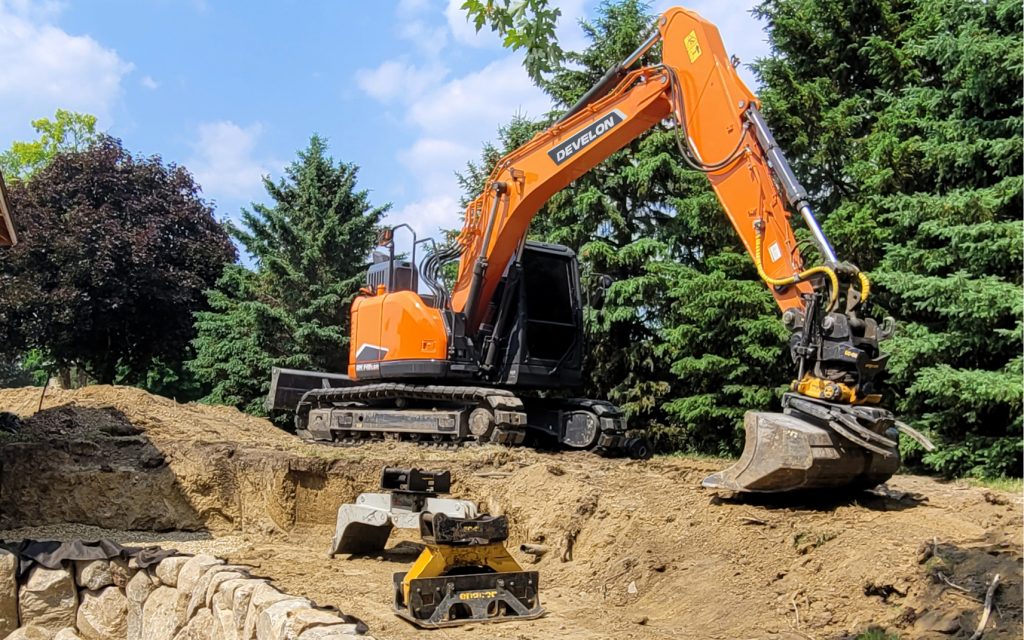
Before using a tilt rotator for excavator, our operators constantly had to swing the upper structure, reposition the tracks, and readjust angles. One week of data logging showed each machine repositioned roughly 14 times per hour. After installing the tilt rotator, that number dropped to around six.
Fuel consumption dropped slightly, yes, but the biggest change was in workflow continuity. Operators reported, “We don’t stop nearly as much, and everything flows better.” That seemingly small improvement directly translates into higher output over a full day.
Compact Machines, Big Impact
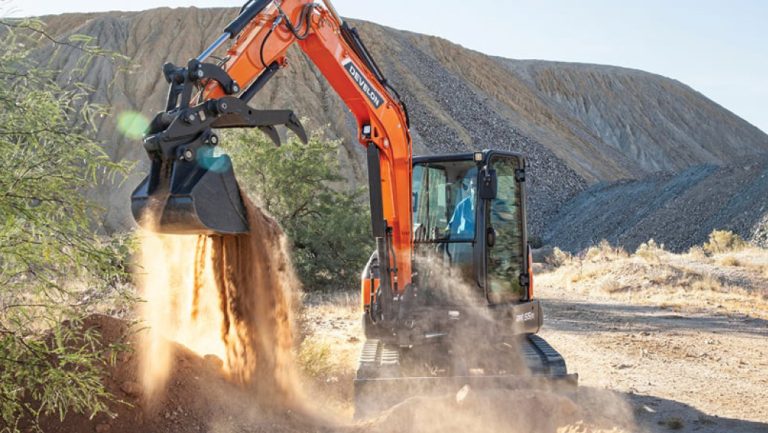
Interestingly, smaller machines often show even more pronounced gains. In a tight urban renovation project, we equipped a 6-ton excavator with a tilt rotator for mini excavator.
Navigating narrow alleyways, we previously had to reverse repeatedly. After installing the tilt rotator, nearly all fine adjustments were done without moving the tracks. By the end of the day:
- One less ground worker required
- Slight reduction in fuel usage
- Much smoother task progression
In small projects, marginal efficiency improvements have a direct effect on profit margins.
Why Structure Matters
A tilt rotator attachment isn’t just a fancy accessory. It’s a hydraulic platform at the end of the arm. Its design determines reliability under continuous operation.
The main structural elements we focus on are:
- High-flow rotary union
- Dual-acting hydraulic cylinders
- Reinforced slewing bearing
- Proportional electro-hydraulic control
These features work together to ensure the machine can handle sustained load without hiccups. Reliability here is less about marketing and more about uptime.
Precision Reduces Rework
Working near gas or water lines, we used a tilt and rotate excavator bucket to make small-angle adjustments. Previously, each pass needed manual trimming. With the tilt rotator, most edges were finished correctly the first time.
Rework rates dropped from about 6% to near 2%. That difference is invisible on paper but directly affects profit. Less rework also means less risk of damaging nearby infrastructure.
Measured Comparison
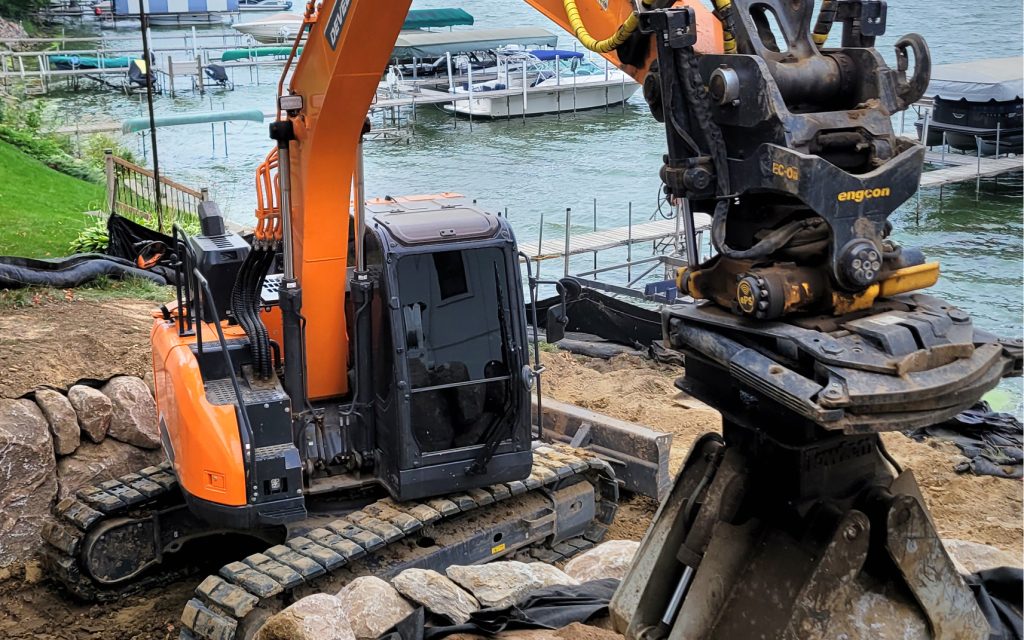
We ran side-by-side tests in identical soil conditions, comparing a conventional bucket to a tilt rotate bucket.
- Angle corrections per hour: high → significantly reduced
- Ground labor: two people → one person
- Surface tolerance: variable → much more consistent
Notice how efficiency isn’t just about digging faster; it’s about eliminating wasted motion.
Continuous Operations Matter
On a landscape stone wall project, a tilt rotating bucket allowed operators to adjust angles precisely without help. Previously, two ground workers guided placement manually. Now, one operator can handle fine adjustments independently.
This reduces communication delays, keeps the workflow steady, and allows for smoother multi-step operations.
Evaluating Purchases
With multiple tilt rotator for sale options, procurement can be confusing. We always follow four key steps:
- Check auxiliary hydraulic flow matches the tilt rotator’s demand
- Evaluate how added arm-end weight affects stability
- Compare annual project types to see if the machine will be fully utilized
- Calculate six-month labor cost savings to determine ROI
Following these steps ensures investment is justified and measurable.
Quick Coupler Changes Workflow
In projects requiring frequent attachment swaps, a tilt rotating quick hitch dramatically reduces downtime. Changing a bucket previously took around ten minutes. With the quick hitch, the same task takes just a few minutes.
Across multiple cycles per day, this adds up. Less idle time equals more productive digging hours.
Labor Optimization
After implementing a rotating tilt bucket, our crew configuration changed.
Before:
- One operator
- Two assistants
After:
- One operator
- One assistant
Over six months, this reduced labor costs enough to cover a significant portion of the tilt rotator investment. It’s a subtle, but real, improvement in profitability.
Real World Takeaways
Tilt rotation doesn’t magically dig faster. Its value comes from:
- Reduced track repositioning
- Lower rework rates
- Optimized labor deployment
- Smoother, more predictable workflow
Think of it as an efficiency tool that reorganizes the way work happens.
When you reduce unnecessary movements, maintain precision, and optimize staffing, you get:
- Higher output per operator hour
- Lower operational risk
- Better project margin stability
In competitive construction markets, these incremental improvements compound into meaningful profit.