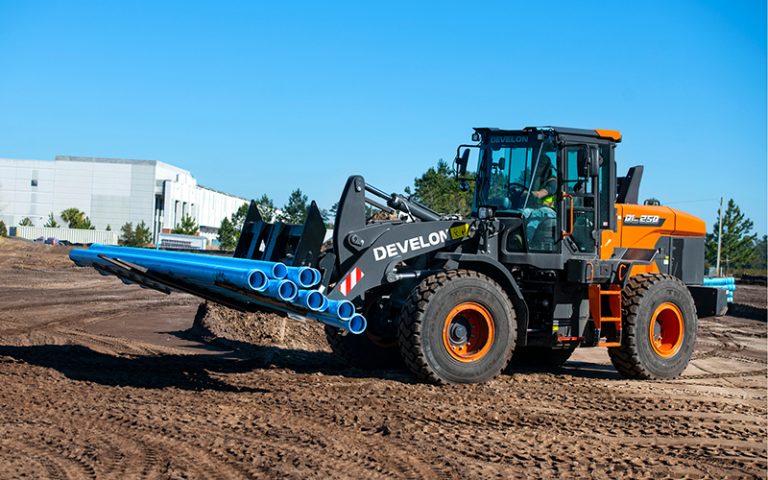
Machine Stable is an authorized distributor of the DEVELON brand under HD Hyundai.


From my years on construction sites, I’ve realized that the hydraulic system is truly the heart of any loader. The hydraulic fluid for loaders keeps machines running efficiently, yet I often see its service life fall short due to delayed maintenance and harsh conditions. When oil degrades, pumps, valves, and cylinders wear faster, which can slow projects and increase repair costs. Through hands-on experience, I’ve learned practical ways to maintain oil life and system performance.
Note: Insights here are drawn from actual operational experience and real project environments.
Delayed Oil Changes and Its Impact
One common issue I encounter is loaders running past recommended oil change intervals. Manufacturers suggest changing hydraulic fluid for loaders every 2000 hours, but in practice, it’s often extended to 3000 hours. I’ve personally observed that even a few hundred extra hours can lead to:
- Dust and particle buildup, which gradually decreases oil effectiveness
- Higher operating temperatures, accelerating oxidation and reducing viscosity
- Faster wear on pumps and valves, sometimes causing early failures
During a project in a particularly sandy site, I noted that a loader’s particle counts exceeded safety limits after just 1200 hours. Actuators responded slower, and the pump emitted higher noise levels. Following a disciplined change hydraulic oil schedule immediately restored performance.
Dusty Environments and Oil Contamination
Operating in dusty conditions severely shortens the life of skid-steer loader fluid. Fine dust particles mix with the oil and can cause:
- Reduced lubrication efficiency
- Clogged filters, leading to inconsistent hydraulic response
- Rising oil temperature, further degrading fluid quality
- Abrasive wear on critical components
On one tracked loader I managed, I noticed darkened oil and sluggish movement after roughly 1000 hours of continuous dusty operation. After replacing the oil and cleaning filters, the machine returned to smooth operation. This shows how tracked loader oil is highly sensitive to environmental contamination.
Non-Standard Maintenance Contamination
I’ve often seen contamination introduced during maintenance in non-standard workshops. Common problems include:
- Dust and metal debris entering the system
- Improper sealing that allows air or particles into the fluid
- Inadequate venting, causing cavitation and reduced efficiency
Once, a skid loader serviced in a poorly ventilated shop showed elevated particle counts. Replacing the 8n loader filtration unit and carefully removing oil from the loader system restored performance. This experience underscores the importance of proper maintenance protocols.
Detecting Oil Contamination
Early detection of degraded oil is crucial. I check for:
Visual cues:
- Darkened or unusual coloration
- Foaming or air bubbles
- Unexplained temperature fluctuations
Operational indicators:
- Slower actuator response
- Reduced lifting capacity
- Vibration or noise increases
Practical metrics:
| Parameter | Recommended | How I Monitor |
|---|---|---|
| Water content | <200 ppm | Moisture meter |
| Particle count | ISO 4406 18/16/13 | Particle counter |
| Viscosity | ±5% of spec | Handheld viscometer |
| Oxidation | Meets OEM limits | Lab test or onsite kits |
These checks ensure hydraulic oil for loader remains effective and protects vital components.
Proper Oil Change Procedure
Correctly removing oil from the loader system requires attention to detail:
- Let the machine cool below 60°C
- Fully drain old oil, ensuring no residue
- Replace the 8n loader filtration unit
- Refill with appropriate hydraulic fluid for loaders
- Confirm hydraulic oil level is within recommended limits
- Start the loader lightly and observe system response
Tip from experience: Using a transparent tube during drainage can help spot leftover contamination that might be missed otherwise.
Maintaining the Hydraulic Oil Cooler
Overheating is one of the main reasons oil life shortens. The hydraulic oil cooler stabilizes temperatures, ensuring:
- Consistent oil viscosity
- Reduced wear on pumps and valves
- Smooth operation under high loads
I routinely inspect and clean the cooler, especially in dusty or hot environments. Neglecting it can reduce the efficiency of even new oil.
Tools and Practices for Oil Management
Using the right tools and maintaining records is essential:
| Tool | Purpose | Benefit |
|---|---|---|
| Oil level gauge | Tracks real-time oil levels | Prevents pump cavitation |
| Particle counter | Detects early contamination | Avoids component wear |
| Cooler cleaning kit | Removes dust and debris | Maintains cooling efficiency |
| Maintenance log | Tracks oil and filter changes | Prevents missed maintenance |
These practices ensure hydraulic oil drains back to pan smoothly and protects system components.
Maintenance Strategy
From experience, a reliable maintenance strategy includes:
- Testing oil every 500 hours for water, viscosity, and particles
- Following change hydraulic oil schedules adjusted for environment
- Replacing the 8n loader filtration unit on schedule
- Regularly inspecting the hydraulic oil cooler
- Documenting all maintenance actions
Following this approach keeps loader hydraulic oil healthy and prevents unexpected failures.
Common Issues and Solutions
- Sluggish response → Check hydraulic oil level and filters
- High operating temperatures → Inspect the hydraulic oil cooler
- Contaminated oil → Perform removing oil from the loader system and replace the filter
- Shortened oil life → Adhere strictly to change hydraulic oil schedules
FAQ – Frequently Asked Questions
Q1: How often should hydraulic oil be changed?
A: Typically every 2000 hours, but high-dust or high-load environments may require earlier changes.
Q2: Can skid-steer loader fluid be used in a tracked loader?
A: Yes, as long as it meets OEM specifications.
Q3: Why is the hydraulic oil cooler critical?
A: It prevents overheating, stabilizes viscosity, and protects pumps and valves.
Q4: How can I detect contaminated oil?
A: Observe color changes, foaming, or smell, and test particle counts and water content.
Q5: What does the 8n loader filtration unit do?
A: It removes debris and protects critical hydraulic components.
Q6: How can I ensure oil drains back to the pan properly?
A: Follow correct removing oil from the loader system procedures and inspect drain points.
Q7: What happens if hydraulic oil level is too low?
A: Low hydraulic oil level can cause cavitation, pump damage, and inefficient operation.
Q8: Does dusty operation shorten oil life?
A: Yes, skid-steer loader fluid and tracked loader oil degrade faster under dusty conditions.
Conclusion
Maintaining hydraulic fluid for loaders requires careful attention:
- Follow change hydraulic oil schedules
- Monitor skid-steer loader fluid and tracked loader oil in harsh environments
- Maintain a clean and functioning hydraulic oil cooler
- Ensure correct hydraulic oil level and replace the 8n loader filtration unit
- Perform removing oil from the loader system correctly to prevent contamination
These best practices ensure longer oil life, smoother operation, and reduced maintenance costs even in challenging construction conditions.